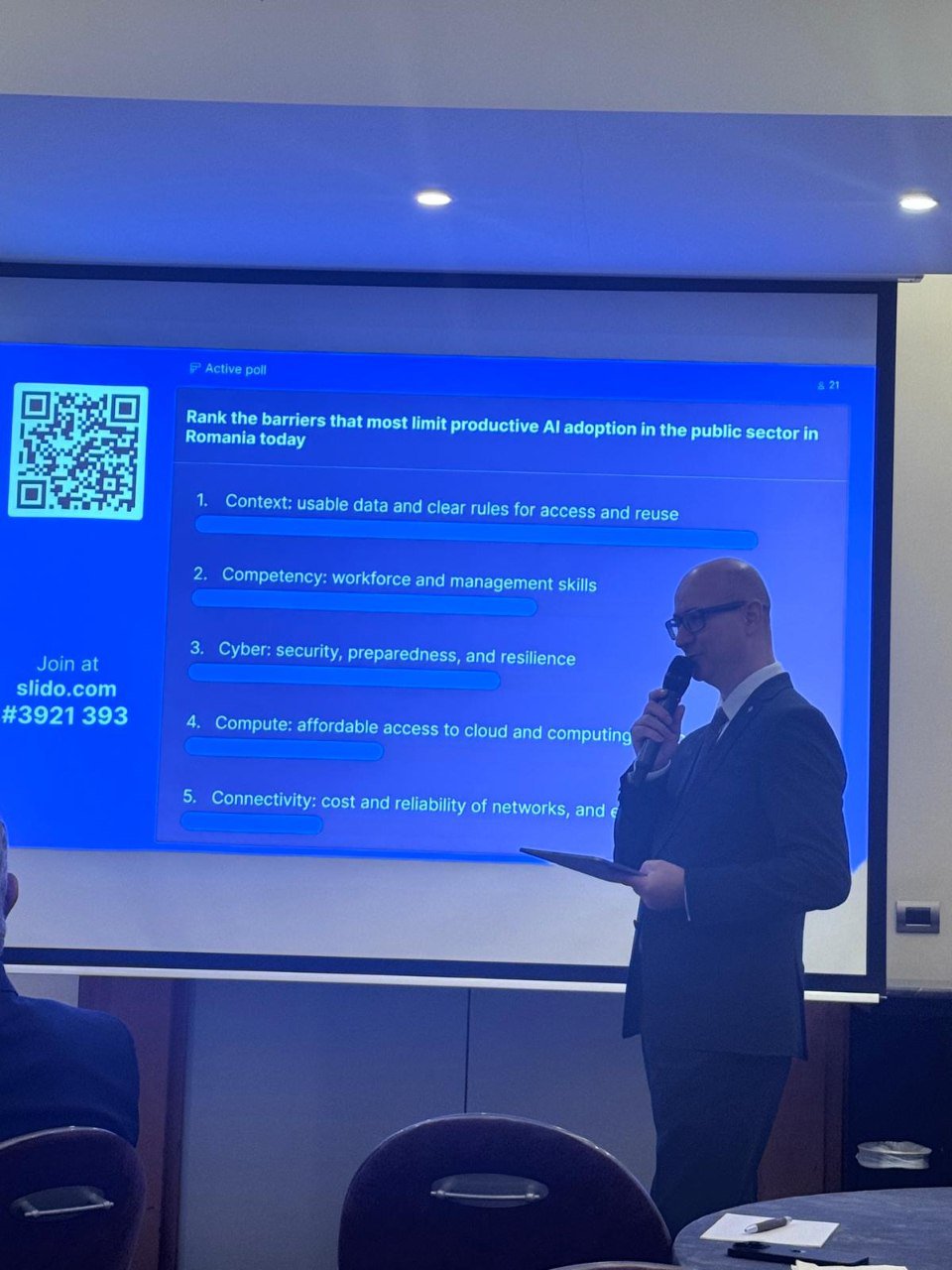
Adrian-Victor Vevera, General Director of the National Institute for Research and Development in Informatics – ICI Bucharest, participated, as a speaker, at the event “NIS 2: impact, compliance and cybersecurity for digital infrastructures and research”, organised by Deloitte Romania on March 31, 2026, in Bucharest.
During the debates, essential topics regarding the implementation of the NIS 2 Directive were addressed, including cyber risk management, executive management responsibility, mandatory incident reporting, supply chain security, and the alignment of this directive with other relevant European regulations. At the same time, emphasis was placed on the specific challenges of the research environment, including open data, international collaborations, and distributed projects.
“The NIS 2 Directive marks an important step in strengthening cyber resilience at the European level and requires an integrated, responsible and applied approach from all the entities concerned. For ICI Bucharest, participation in this type of dialogue is essential because the research environment and digital infrastructures need concrete solutions, institutional cooperation and a common vision on cybersecurity. Only through collaboration and continuous adaptation can we build a secure and resilient digital ecosystem”, said Adrian-Victor Vevera, General Director of ICI Bucharest.
The event brought together representatives of authorities, digital infrastructure operators, service providers, and the research environment in a dialogue framework dedicated to the impact and requirements of the NIS 2 Directive, one of the most important European instruments for strengthening cybersecurity. It offered participants the opportunity to analyse case studies, exchange best practices, and discuss the maturity of security programs and their alignment with relevant standards in the field.