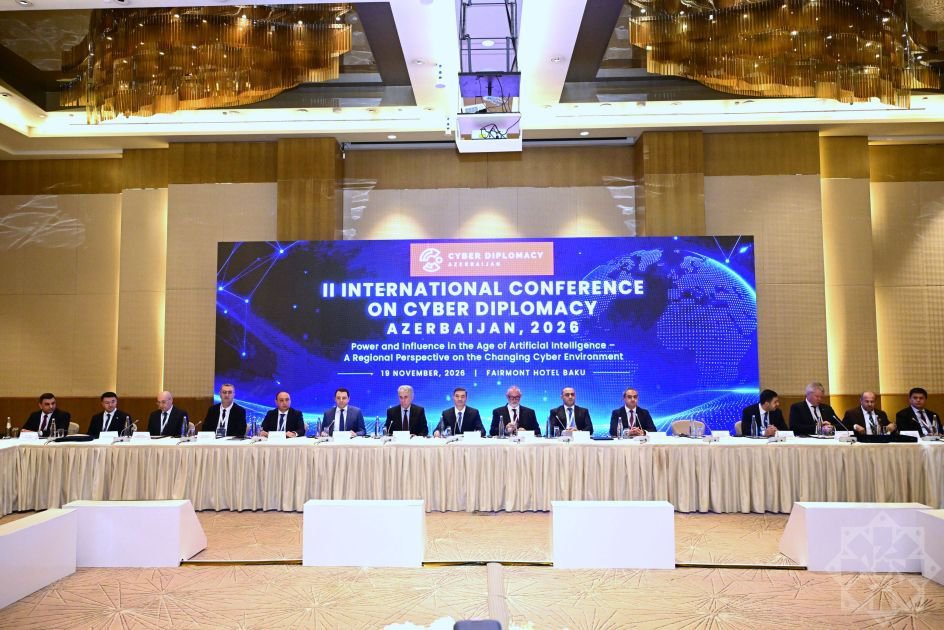
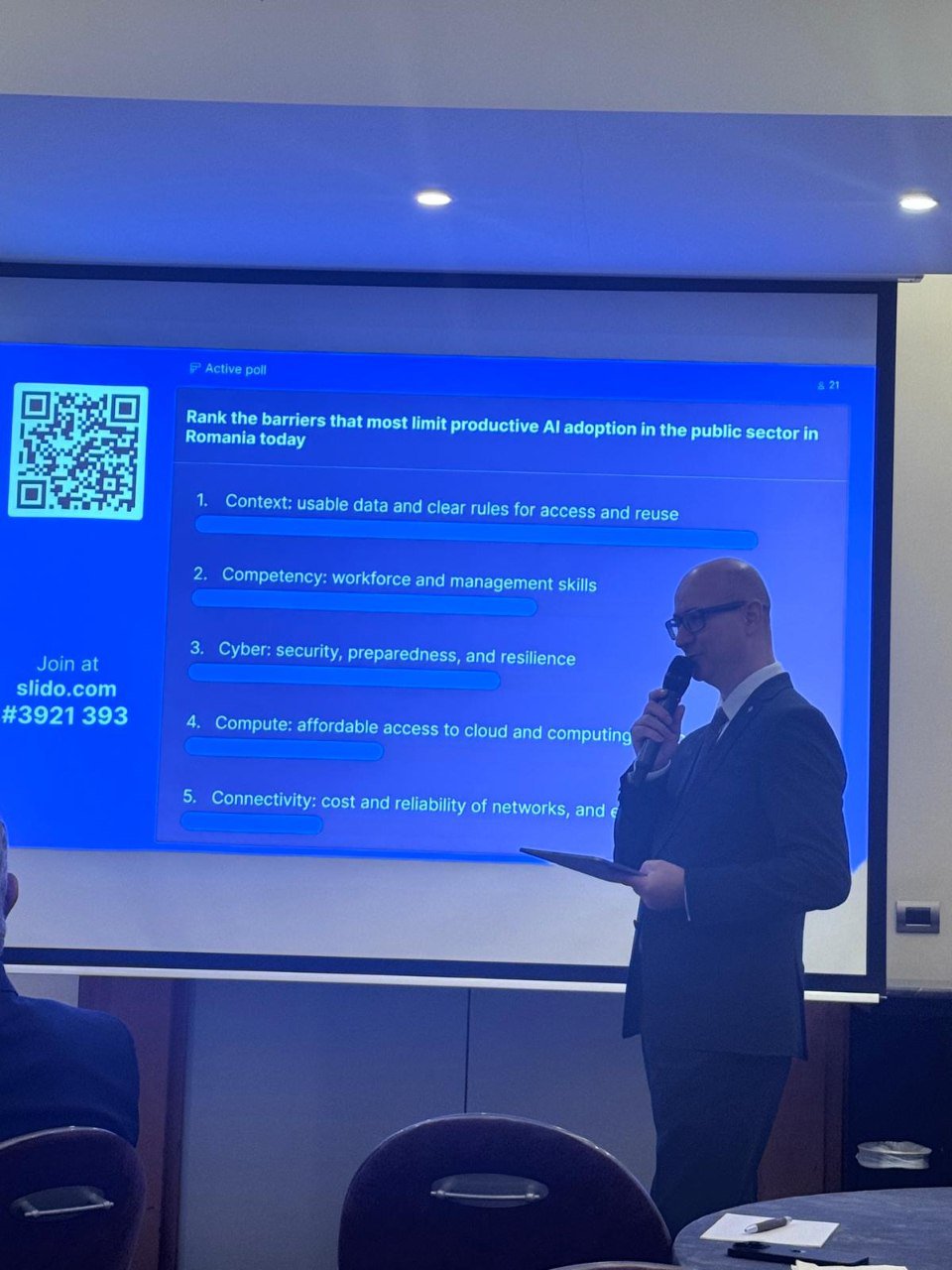
The security of cross-border infrastructure, international cooperation in responding to cyber incidents, and the influence of artificial intelligence on international relations were among the topics addressed at the Second International Conference on Cyber Diplomacy (ICCD 2026), held on Thursday, 19 November 2026, in Baku, Azerbaijan.
The conference was organised by the State Service of Special Communication and Information Security of the Republic of Azerbaijan and the National Institute for Research & Development in Informatics – ICI Bucharest, in cooperation with the
Presidential Administration, the Ministry of Foreign Affairs, the Ministry of Digital Development and Transport, the State Security Service of Azerbaijan, and other local partners.
Held under the theme “Power and Influence in the Age of Artificial Intelligence – A Regional Perspective on the Changing Cyber Environment”, the event brought together diplomats and representatives of public institutions, international organisations, the research community, and the private sector. Discussions covered, among other topics, the role of technology companies in international relations, the risks associated with deepfake content, and state responsibility in cyberspace.
In his speech, Dr. eng. Adrian-Victor Vevera, General Director of ICI Bucharest, discussed the relationship between strategic autonomy and international cooperation. He highlighted the importance of partnerships that enable countries to access technological resources they lack and develop their own capabilities while retaining the ability to make independent decisions.
Given the energy, transport, and digital links between the Black Sea region and the South Caucasus, cyber incidents can have consequences extending beyond national borders. As an example of cooperation in this area, the General Director presented the Cyber Polygon project, carried out between 2024 and 2026 by ICI Bucharest and its Azerbaijani energy-sector partners.