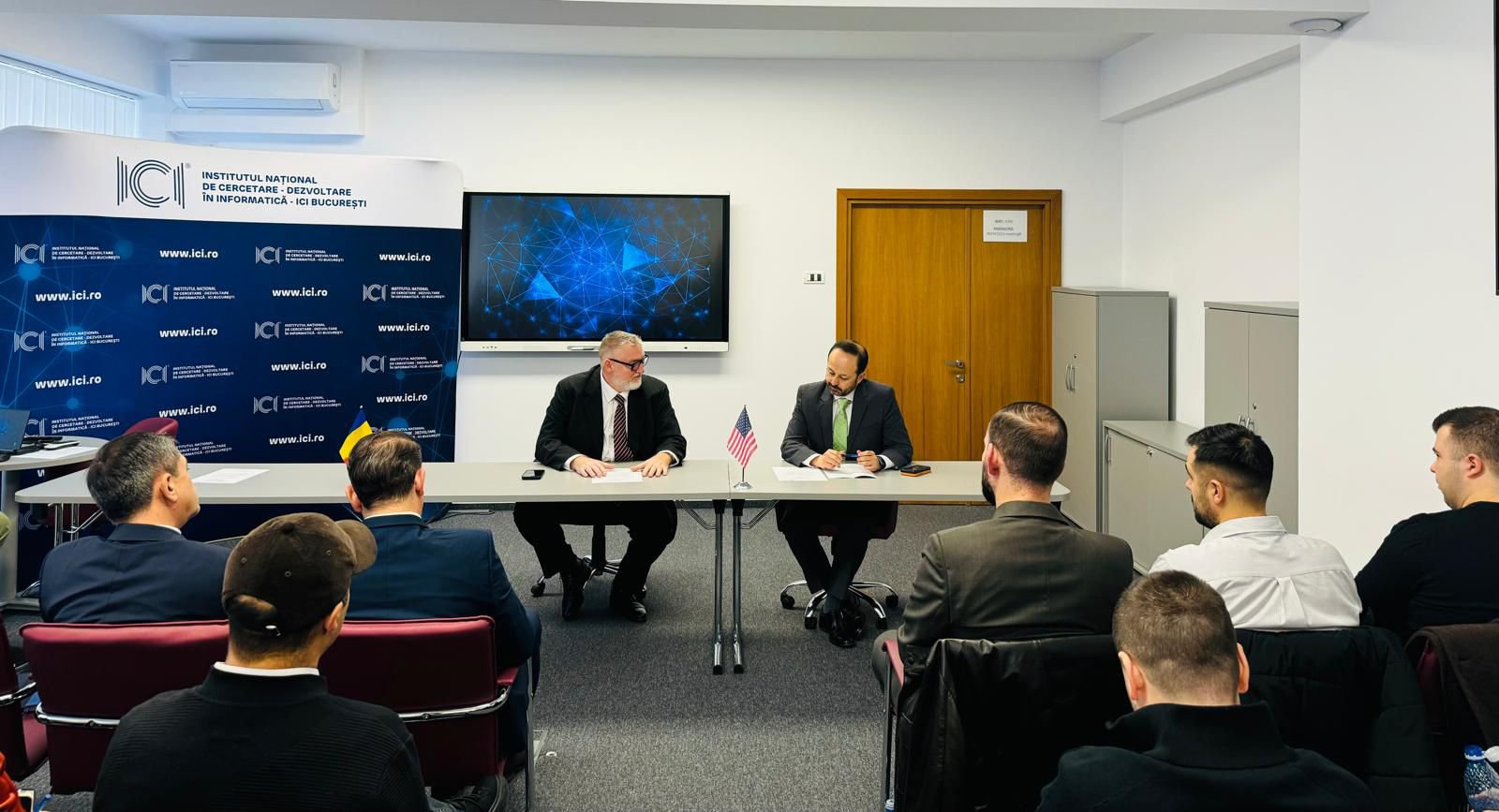
The National Institute for Research and Development in Informatics (ICI Bucharest) organized the "Defense Industry Facing Dual Technologies and NATO Requirements" workshop today, December 11, 2024. The event hosted at ICI Bucharest's headquarters, brought together defense experts, local integrators, and defense industry representatives.
The workshop's main objective was to strengthen collaboration between the defense industry, the technology sector, and international partners. It focused on integrating dual technologies—technologies that can be used for civilian and military purposes—into modern defense strategies.
Invited to speak at the opening of the event, Ricardo Pelaez, the Counselor for Commercial Affairs and Regional Senior Commercial Officer for Southeast Europe at the U.S. Embassy in Bucharest, emphasized the importance of fostering collaboration and innovation between both national and international companies. He stated, "Collaboration is essential to stimulate dialogue on critical security and innovation issues. This event highlights our joint commitment to addressing global challenges.”
In a recent message, Bogdan Gruia Ivan, the Minister of Research, Innovation, and Digitalization, highlighted the importance of technology in enhancing national security. The interactive sessions covered a range of topics, including dual-use technologies and their implications for national and international security. They also discussed NATO standards, the need for local industries to adapt to these requirements, and the role of public-private partnerships in developing defense solutions.
“In a rapidly changing world, collaboration between governments and industry is essential for addressing security challenges. Through this workshop, we aim to support joint efforts in developing and integrating dual-use technologies in defense, in accordance with NATO standards and requirements,” stated Adrian-Victor Vevera, General Director of ICI Bucharest.
The "Defense Industry Facing Dual Technologies and NATO Requirements" workshop significantly enhances relations between Romania, NATO, and the international community. The conclusions and recommendations from today's discussions will serve as a foundation for future initiatives to accelerate the defense sector's development and bolster regional and global security.